
Sympathetic Dominance: Why You Feel Wired and Unable to Switch Off
Understanding your nervous system and how to support its natural balance
High cortisol, sympathetic dominance, adrenal fatigue, being stuck in fight/flight/freeze mode, burnout — these are all terms you may have come across. While they sound different, they are often describing a similar underlying pattern: a nervous system that is spending too much time in a heightened state of alert.
For simplicity and accuracy, we’ll use the term sympathetic dominance throughout this article. This refers to when the sympathetic branch of the nervous system — often known as the fight or flight response — remains more active than it ideally should for extended periods of time.
To understand this, it helps to have a basic understanding of the autonomic nervous system. This is the part of your nervous system that controls the processes in your body that happen automatically — things like heart rate, breathing, digestion and hormone regulation.
It has two main branches: the sympathetic nervous system (the fight or flight response, including freeze responses) and the parasympathetic nervous system (known as the rest and digest system). These systems work in a dynamic balance, constantly adjusting to help your body respond appropriately to what’s happening around you.
Throughout the day, activity naturally shifts between the two. During periods of stress or high demand — such as a busy workday — the sympathetic system becomes more active. Your heart rate increases, blood flow moves toward your muscles, and your senses sharpen to help you respond quickly. In the evening, or when you feel safe and relaxed, the parasympathetic system becomes more dominant, allowing your body to rest, repair, digest and prepare for sleep.
For many people, the challenge isn’t experiencing stress — it’s shifting out of it. Modern life exposes us to a constant stream of stimulation: busy schedules, work pressures, family responsibilities, financial stress, notifications, screens, and the expectation to always be available. Unlike short bursts of stress that our nervous systems are designed to handle, this ongoing low-level activation can make it difficult for the body to fully return to a restorative state.
Over time, this can lead to a pattern of sympathetic dominance, where stress hormones such as cortisol and adrenaline continue to signal alertness even when the body is physically and mentally exhausted. This is why many people describe feeling wired, overwhelmed, or unable to relax despite being deeply tired.
As part of our Feel Good February focus on small habits that support health and wellbeing, I’ve been especially mindful of this myself — spending more time outdoors, attending yin yoga classes, and swimming regularly. I often find that when I’m in the water slowly counting my breaths, it feels deeply meditative and most of the noise in my mind settles. These simple practices are powerful examples of how small, consistent inputs can help signal safety to the nervous system.
Signs Your Nervous System May Be Stuck in Sympathetic Dominance
When the sympathetic nervous system remains active for long periods, it often shows up in ways people don’t immediately recognise as stress-related. These signs can be physical, emotional, or cognitive — and many people experience a combination of them.
You may notice:
Physical Signs
☐ Persistent muscle tension, especially in the neck, shoulders or jaw
☐ Headaches or tightness through the upper body
☐ Shallow breathing or feeling unable to take a deep breath
☐ Digestive changes such as bloating, discomfort or irregular bowel habits
☐ A constantly elevated or easily increased heart rate
☐ Feeling physically tired but internally “wired”
Mental & Emotional Signs
☐ A racing mind or difficulty switching off thoughts
☐ Trouble concentrating or feeling easily overwhelmed
☐ Increased irritability or reduced patience
☐ Feeling anxious or constantly “on edge”
☐ Reduced tolerance for everyday stressors
Sleep & Energy Patterns
☐ Difficulty falling asleep despite feeling exhausted
☐ Waking frequently overnight
☐ Feeling unrefreshed after sleep
☐ Energy crashes throughout the day
These experiences are not signs that something is “wrong” with you — they are often signs that your nervous system has been working hard to keep you safe for an extended period of time.
What Happens When Sympathetic Dominance Becomes Chronic
The fight or flight response is designed to be short-term. It is incredibly effective at helping us respond to immediate challenges, but it is not intended to remain active continuously.
When sympathetic dominance becomes chronic, the body begins to prioritise survival over maintenance. Resources are directed toward staying alert and ready for action, while restorative processes become less efficient.
This can impact many systems in the body. Digestion may slow or become disrupted, as energy is diverted away from the gut. Sleep quality often declines, making it harder for the body to repair and regulate hormones effectively. Immune function can become less robust, leaving people more susceptible to illness or slower to recover.
Over time, persistent activation can also affect emotional regulation and resilience. Because the nervous system remains primed for threat detection, the brain becomes more sensitive to stress, making it easier to feel overwhelmed even by everyday demands.
Importantly, this pattern does not mean the nervous system is “broken.” It reflects an adaptive system that has been responding appropriately to prolonged stress — it simply hasn’t had enough opportunity or support to shift back into a restorative state.
Helping Your Nervous System Shift Out of Sympathetic Dominance
The good news is that the nervous system is highly adaptable. Just as it can become conditioned toward a state of alertness, it can also learn to shift back toward safety, regulation and restoration. This usually happens through consistent small inputs that signal to the body that it is safe to slow down.
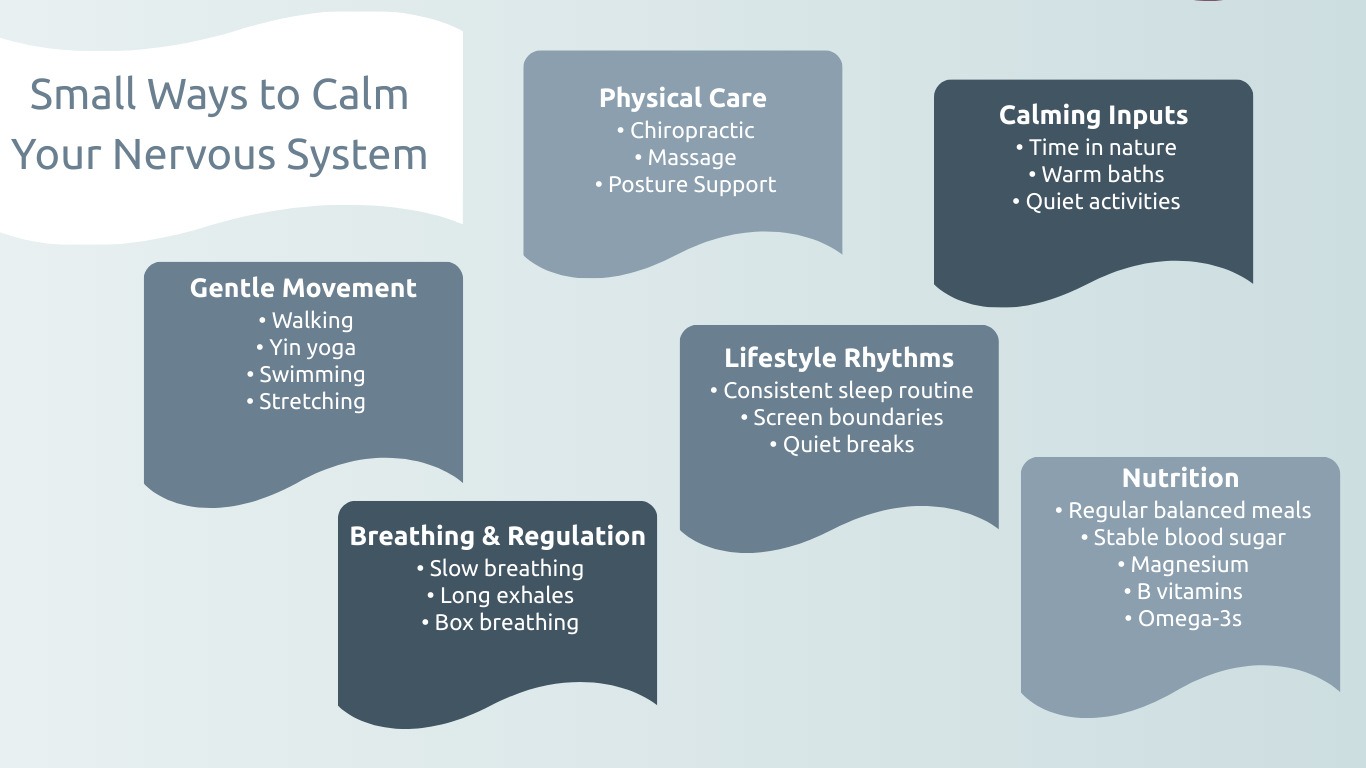
Supporting the nervous system can happen through many avenues — physical care, movement, lifestyle rhythms and nutrition all play a role. Often the most helpful place to start is simply choosing one or two strategies that feel realistic and calming for you.
Body & Movement
Yin yoga classes, gentle stretching before bed, slow walks outdoors, swimming, time in nature
Breathing & Regulation
Yogic breathing techniques such as box breathing or 4-7-8 breathing, slow long exhales
Physical Care
Chiropractic care, massage, myotherapy, addressing chronic muscle tension
Lifestyle Rhythms
Consistent sleep routines, reducing evening screen exposure, building quiet breaks into the day
Nutrition
Regular balanced meals (rather than constant snacking), adequate protein intake, stable blood sugar patterns
Nutritional Support
Magnesium, B vitamins, omega-3 fatty acids, herbal supports for stress resilience
Calming Inputs
Warm baths, calming music, quiet hobbies, time with supportive people
There is no single “perfect” strategy. If something helps you feel calmer, safer, or more grounded, it is likely supporting your nervous system — and those are the inputs worth prioritising.
A Final Thought
If you’ve recognised yourself in these patterns, you’re not alone. Many people are living with nervous systems that have been working in a heightened state for a long time. What’s important to remember is that this response is not a failure or a weakness — it is an adaptive system that has been trying to keep you safe. With the right support and consistent small inputs, the nervous system can learn to feel safe enough to slow down again.
It can also feel overwhelming to know where to start, especially when you’re already tired, busy or stretched. You don’t have to figure it out on your own. The team at Your Body Works can help you understand what may be happening in your nervous system and work with you to create a realistic, supportive plan — or you may choose to seek guidance from another trusted healthcare provider. With the right support and small, sustainable steps, it is absolutely possible to move out of constant fight or flight and toward feeling calmer, more regulated and more resilient.